

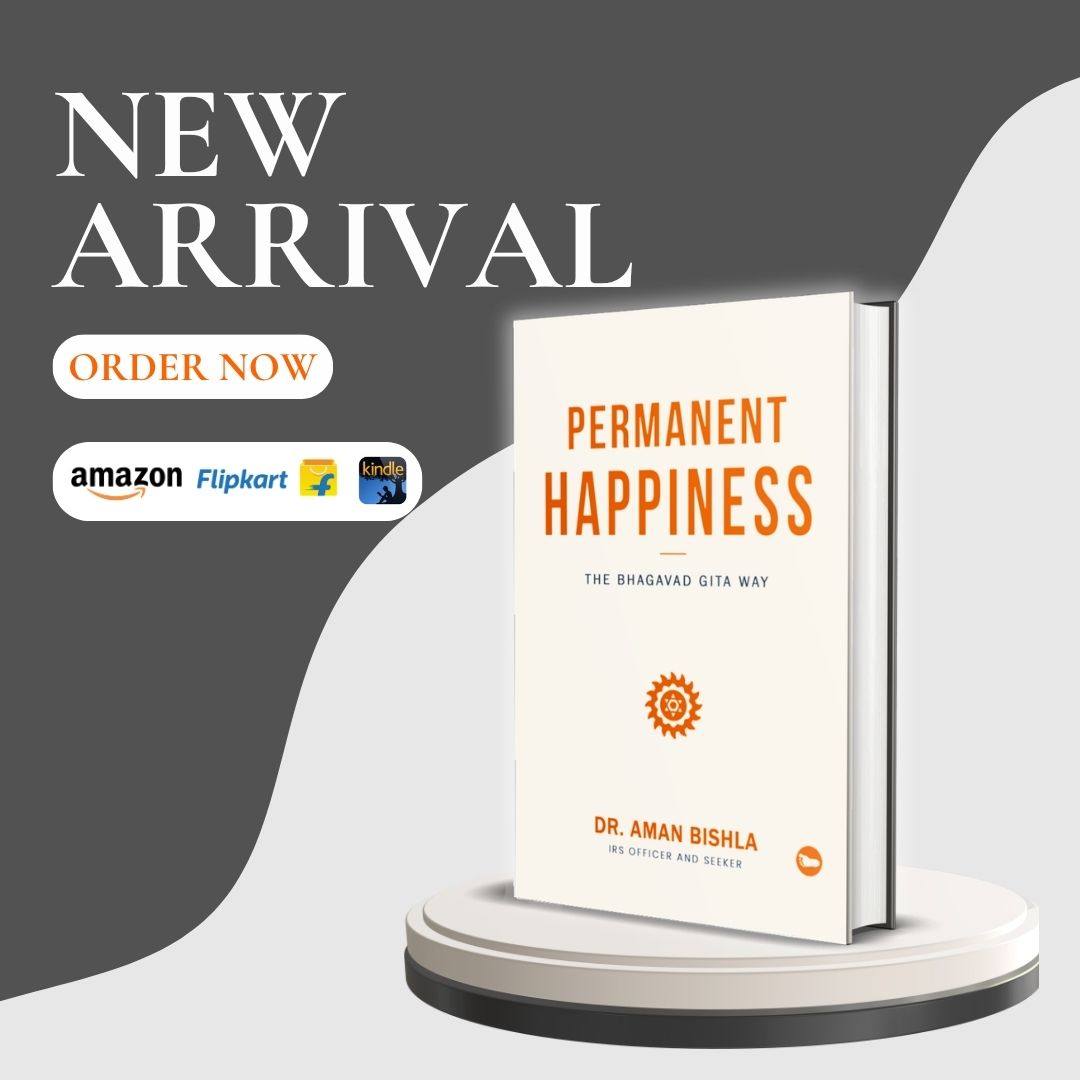
In an age dominated by endless notifications, relentless ambition, and the constant pursuit of “more,” Permanent Happiness: The Bhagavad Gita Way by Dr. Aman Bishla, IRS, arrives as a thoughtful reminder that humanity’s oldest questions often have the most enduring answers. Rather than presenting the Bhagavad Gita as a theological text alone, the author interprets it as a practical guide for navigating the emotional complexities of contemporary life.
The central premise is deceptively simple yet profoundly relevant: every human pursuit, whether wealth, achievement, recognition, or relationships, is ultimately driven by the desire to be happy. However, lasting happiness remains elusive because people continue to seek it in external circumstances rather than within themselves. This idea forms the foundation of the book and is developed through clear, accessible language that speaks equally to students, professionals, entrepreneurs, parents, and retirees.
One of the book’s greatest strengths is its ability to connect the timeless dialogue between Krishna and Arjuna with the realities of modern existence. Arjuna’s battlefield becomes a metaphor for today’s corporate pressures, personal anxieties, emotional confusion, and existential uncertainty. Instead of treating ancient philosophy as distant history, Dr. Bishla demonstrates how its principles continue to illuminate contemporary struggles with stress, ambition, attachment, and purpose.
The book unfolds in a logical progression, beginning with the universal search for happiness before exploring the impermanence of pleasure, the nature of the Self, mastery over the mind, freedom from expectations, healthy detachment, equanimity, and finally practical habits that cultivate inner peace. Particularly noteworthy are chapters such as Mastering the Mind, Freedom from Expectations, and Daily Practices for Permanent Happiness, which translate philosophical concepts into actionable guidance without overwhelming readers with technical terminology.
Unlike many books on spirituality that remain abstract, Permanent Happiness consistently emphasizes application. Meditation, gratitude, mindful observation, selfless service, reflection, and disciplined action are presented not as religious rituals but as practical disciplines capable of transforming everyday life. The inclusion of a 20-minute daily routine and reflective questions at the end of chapters makes the book interactive and encourages readers to engage personally with its teachings.
The writing style deserves special mention. Dr. Bishla avoids dense philosophical jargon and instead adopts a conversational, encouraging voice. His examples, from students and entrepreneurs to professionals and families, ensure that readers from diverse backgrounds can relate to the lessons being discussed. This accessibility makes the work particularly appealing to first-time readers of the Bhagavad Gita who may find traditional commentaries intimidating.
Perhaps the book’s most compelling contribution is its insistence that permanent happiness is not the result of acquiring more possessions or achievements but of transforming one’s relationship with them. The recurring emphasis on equanimity, self-awareness, and inner freedom offers a refreshing alternative to today’s culture of constant comparison and external validation.
The book does not attempt to replace classical commentaries on the Bhagavad Gita. Instead, it serves as an accessible companion that distills its core insights into a language suitable for the twenty-first century. Readers seeking rigorous academic analysis may wish for deeper engagement with Sanskrit verses and historical scholarship. However, those searching for a practical introduction to the Gita’s philosophy will likely appreciate the book’s clarity, structure, and everyday relevance.
At a time when discussions of mental well-being often revolve around productivity hacks and quick fixes, Permanent Happiness: The Bhagavad Gita Way gently reminds readers that true contentment is cultivated through wisdom, self-understanding, and conscious living. It is less a book to be read once than one to be revisited, reflected upon, and gradually lived.
