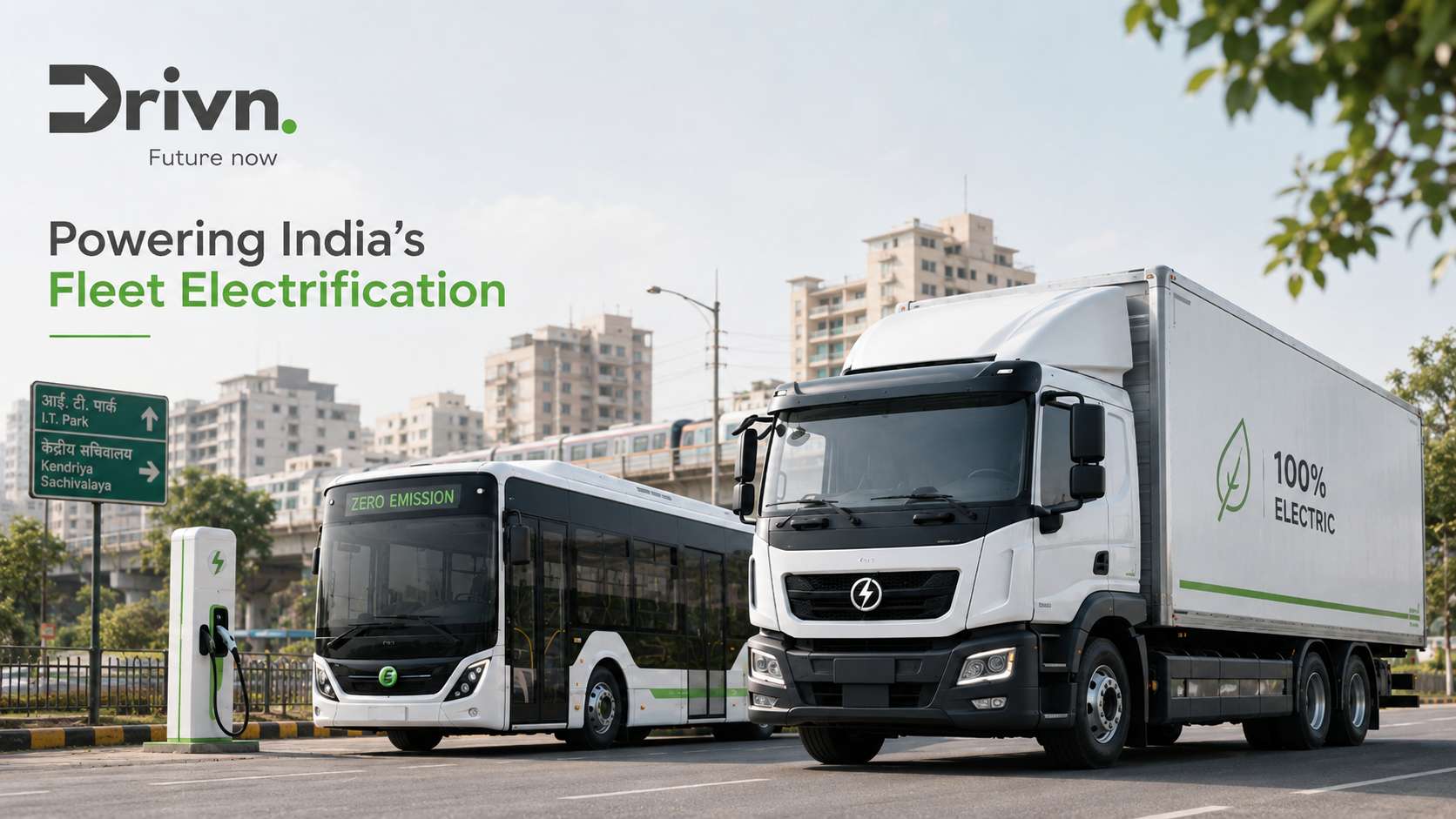
Drivn’s sustainable EV leasing solutions are enabling fleet operators to switch to electric vehicles without bearing the full upfront cost, making fleet electrification more accessible and practical. By providing leasing models tailored for buses and heavy-duty trucks, Drivn is helping businesses reduce emissions, lower operating costs, and support India’s sustainability goals.
The Challenge of Fleet Electrification in India
Commercial fleet electrification in India faces three primary barriers:
- High upfront costs: Electric buses and trucks can cost 2-3 times more than diesel equivalents. Many operators cannot allocate capital for a full purchase.
- Limited charging infrastructure: City depots and intercity routes often lack sufficient fast-charging stations.
- Maintenance and operational complexity: EVs require different expertise, charging protocols, and battery management.
Without an alternative, fleet operators delay adoption, which slows India’s progress toward clean logistics. In 2025, less than 5% of commercial fleets in major metro cities were electric, illustrating the scale of the challenge.
How Leasing Solutions Can Make EV Adoption Practical
Drivn provides sustainable EV leasing solutions in India that can help overcome these barriers:
- Lower upfront investment: Operators pay manageable instalments rather than the full vehicle price.
- Access to modern EV technology: Leasing allows fleets to upgrade to newer models without financial strain.
- Included maintenance and charging support: Vehicles are monitored remotely and serviced proactively.
- Flexible contract durations: Leases can be structured for short-term pilot fleets or long-term expansion.
- Operational risk mitigation: Leasing reduces depreciation and technology obsolescence risk for the operators.
Comparing Drivn’s Leasing Model vs Traditional Purchase Models
Feature | Traditional Purchase | Drivn Leasing Solution |
Upfront Cost | High | Low/Moderate |
Maintenance & Charging Support | Owner responsibility | Managed by Drivn |
Flexibility in Fleet Scaling | Limited | High |
Risk of Technology Obsolescence | High | Low |
Impact on Emissions and Operational Costs
A single electric bus replacing 30 diesel trips daily can cut up to 12 tons of CO₂ per year. Heavy-duty trucks on EV power reduce fuel costs by 40-50% and require fewer maintenance interventions due to simpler drivetrains.
By adopting Drivn’s leasing model, operators experience:
- Immediate emissions reduction: Electric buses and trucks replace multiple diesel trips, cutting CO₂ emissions by several tons per vehicle annually and improving air quality in urban and peri-urban areas.
- Lower total cost of ownership (TCO): EVs have fewer moving parts, lower energy costs, and reduced maintenance requirements, which together can decrease operating expenses by 30-50% compared to diesel fleets.
- Enhanced fleet reliability: Advanced battery management, telematics, and predictive maintenance reduce downtime, ensuring vehicles remain operational and schedules stay on track.
To Conclude
Drivn’s sustainable EV leasing solutions are removing the financial, operational, and technical barriers to fleet electrification in India. Fleet operators benefit from lower costs, reduced emissions, and simplified management while contributing to India’s environmental goals. Leasing models like this are proving that commercial sustainability can be profitable, scalable, and practical.
Frequently Asked Questions
- What types of vehicles can be leased through Drivn?
Drivn offers electric buses and heavy-duty trucks specifically designed for commercial fleet operations. These vehicles can be suitable for urban transport, intercity logistics, and last-mile delivery, helping businesses transition to sustainable fleets efficiently.
- How can leasing make adopting electric vehicles more affordable?
Leasing allows businesses to pay for EVs in smaller, manageable instalments instead of a full upfront purchase. This lowers initial capital requirements, reduces financial risk, and enables operators to adopt electric vehicles more quickly without straining budgets.
- Do electric vehicles require special maintenance or infrastructure?
Electric vehicles have simpler drivetrains than diesel or petrol vehicles, so routine maintenance is generally lower. However, EVs require proper battery care, charging infrastructure, and periodic software updates to ensure efficiency and longevity.